To some the Scaled Agile Framework seems like agile with it's heart removed and the process turned up to 11; a set of guidelines and practices designed by consultancies to sell "Agile" to organisations undertaking large software development programmes. They believe it's promises to synchronise, homogenise and constrain a legion of development teams are irresistible to companies that want... Continue Reading →
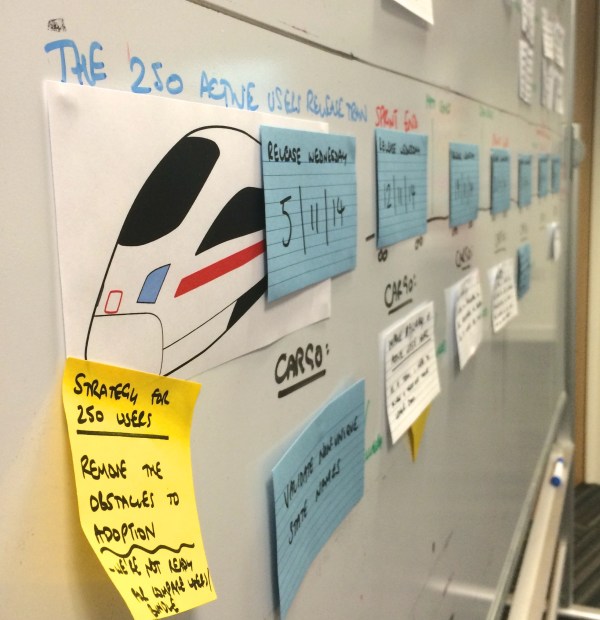
Laying the track as we go: New product development and the Agile Release Train
The 'Agile Release Train' has been popularised as part of the Scaled Agile Framework - a set of guidelines aimed to bring agile software development to the enterprise and programme delivery. In the framework, the train metaphor is used to describe a series of iterative releases set to a strict schedule that multiple teams must abide by... Continue Reading →
Down with the annual appraisal!
As we near the end of a year, people managers across the world will be aware of the looming, ominous shadow of a well-known nemesis; the annual appraisal process. But at Red Gate, we don't do annual appraisals. Here's why.
Hello, SQL Lighthouse: Meaningful deadlines FTW
Last week, my team released a beta version of the product we have been working on for the last six months - SQL Lighthouse. This week, everyone on the team has been reminded how motivating it is to see an idea you've been working on start to gather recognition and, more importantly for us, users. At... Continue Reading →
Retrospective Activity: By The Numbers
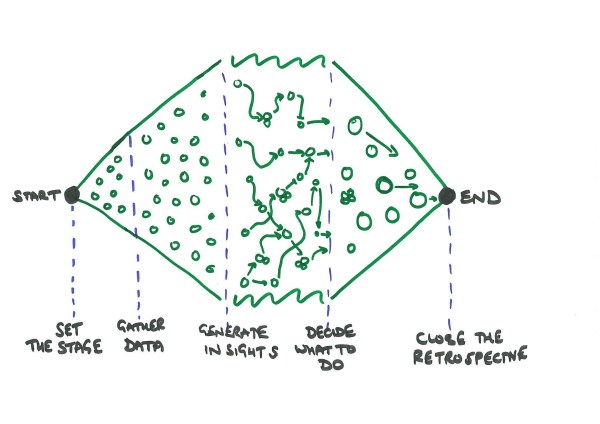
Introduction I thought I’d share a sprint retrospective activity I came up with recently. As I outlined in a previous post, I like to structure the retrospectives I facilitate in the form popularised by Esther Derby and Diana Larsen in their book Agile Retrospectives. That structure has five sections, each with a specific goal: Set the... Continue Reading →
Agile 2014 attendees, what are you going to do?
If you attended the outstanding Agile 2014 conference in Orlando over the last week, and you are even remotely like me, then you’ll have returned home with a mind bursting with new ideas and techniques gleaned from your time away. You may well have drawn great inspiration from your time in that hermetically-sealed agilist bubble... Continue Reading →
Five steps to an effective sprint retrospective
In a typical agile software development process, sprint retrospectives are meetings run at the end a development iteration. In those sessions the team looks back on what they have done and how they have done it, and decides what they can do to improve. More succinctly, the team inspect and adapt. In my... Continue Reading →
The Art of the Retrospective on InfoQ
Last year I gave a talk about retrospective meetings at Agile Cambridge 2013 - a conference for Agile and Lean practitioners in the East of England. My session was called "The Art of the Retrospective" and was focused squarely on sprint retrospective meetings. The 90-minute presentation (!) tried to answer why these regular meetings are... Continue Reading →
How to deal with a dissenting voice in the team
As leaders of experienced, skilled and knowledgeable staff, we want team members to be able to speak up and disagree with something they don’t think is right. We want people to highlight the problem that no-one else has thought of. However, a dissenting voice can be very disruptive when it goes against the goals, direction... Continue Reading →
The success of weekly releases
Back in August last year my team and decided to release our product on Wednesdays. In fact, I said we were going to release every Wednesday. At the time, our deployment processes were already automated, we were breaking our work down into small valuable chunks and our automated test suite was comprehensive, trustworthy and performant.... Continue Reading →